A commercial builder in McKinney broke ground on a new retail pad near US-75 last August. The excavation looked clean. Gray-brown clay. They poured the footings. Six months later, the slab had hairline cracks running diagonally from the entry. The problem wasn’t the concrete. It was the clay beneath it. Nobody ran a proper Atterberg limits test on the subgrade before the pour. McKinney sits on the Blackland Prairie, a geological formation loaded with high-plasticity clays that swell when wet and shrink when dry. The liquid limit in these soils routinely exceeds 50. That means volume change. That means slab distress. A quick grain-size analysis combined with Atterberg limits testing would have flagged the expansive clay before the concrete truck ever arrived.
On Blackland Prairie clays, a plasticity index above 25 is a red flag. Ignoring it turns a $600 test into a $60,000 foundation repair.
Methodology and scope
Local considerations
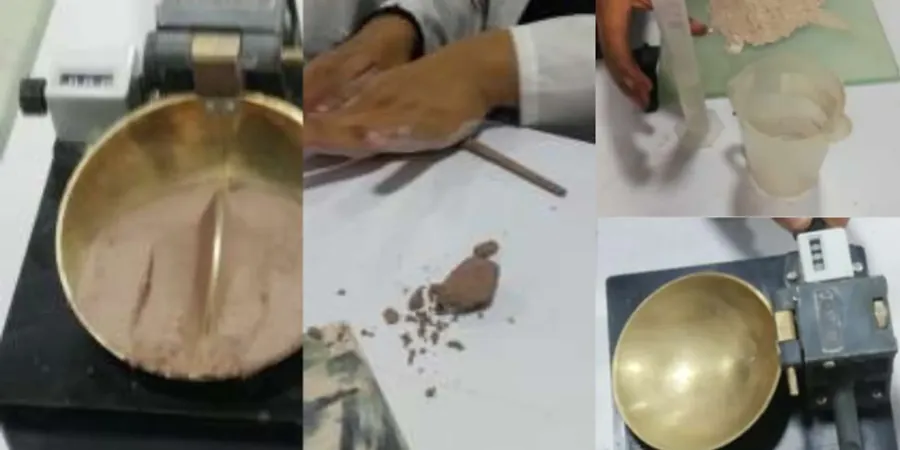
The lab bench is simple. A brass cup. A grooving tool. A glass plate. But the hands running the test matter more than the equipment. Our technician in McKinney has logged thousands of liquid limit drops on Blackland Prairie samples. She knows the feel of CH clay at 40 blows versus 25. The Casagrande cup drops at two rotations per second from a cam set to exactly 10 mm height. If that calibration drifts by half a millimeter, the liquid limit shifts by several points. That error propagates straight into the foundation design. We calibrate the drop height weekly with a gauge block. The grooving tool is sharpened when the wear exceeds 0.5 mm. These are small details. But in McKinney, where expansive clays dominate the subgrade from Stonebridge Ranch to Craig Ranch, a 5-point error in the plasticity index changes the recommended pier depth by feet. The risk isn’t theoretical. It shows up in door frames that stick and drywall that cracks.
Applicable standards
ASTM D4318-17e1 — Standard Test Methods for Liquid Limit, Plastic Limit, and Plasticity Index of Soils, ASTM D2487-17e1 — Standard Practice for Classification of Soils for Engineering Purposes (Unified Soil Classification System), TxDOT Tex-104-E — Determining Plasticity Index of Soils, IBC 2021 Section 1803 — Geotechnical Investigations (expansive soil classification requirements)
Associated technical services
Standard Atterberg Limits Package
Liquid limit, plastic limit, and plasticity index for up to 5 samples per boring. Includes USCS classification and a summary letter for the geotechnical report. Turnaround: 3 business days.
Expansive Soil Characterization Suite
Full Atterberg limits plus grain-size distribution, activity calculation, and shrink-swell potential rating per TxDOT methodology. Recommended for any McKinney project where the PI exceeds 25.
Typical parameters
Frequently asked questions
What does an Atterberg limits test cost for a McKinney residential project?
For a typical single-family lot in McKinney, the standard Atterberg limits test runs between US$60 and US$90 per sample, depending on the number of samples submitted and the turnaround time required.
Why do McKinney soils require Atterberg limits testing when we already have SPT data?
SPT blow counts measure density and relative strength. They don’t measure the clay’s affinity for water. McKinney’s Blackland Prairie clays can have moderate SPT values but very high plasticity, meaning they will heave and shrink with seasonal moisture changes. Atterberg limits quantify that behavior directly.
How long does it take to get results back from the lab?
Standard turnaround is three business days from sample receipt. We can deliver next-day results for time-sensitive projects when coordinated in advance. Samples must be sealed in moisture-tight containers and delivered to our McKinney drop-off point.