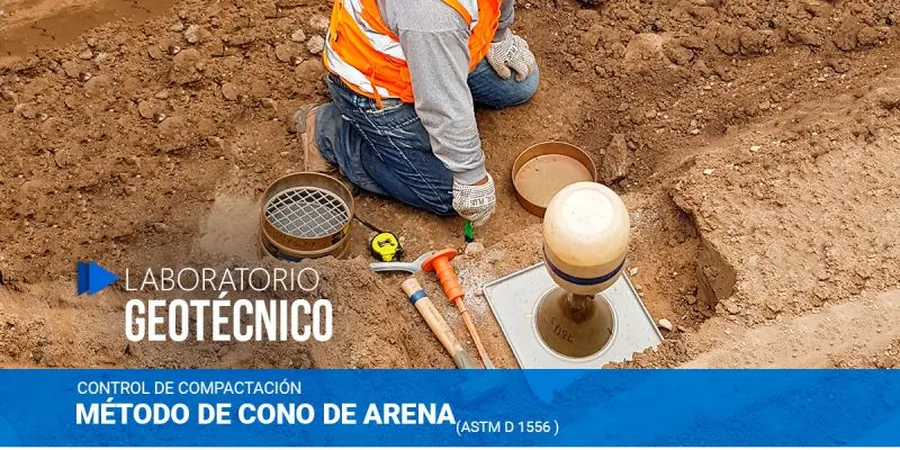
One of the most common—and expensive—mistakes we see in McKinney construction is assuming that a few passes with a roller guarantee compaction. The expansive clay soils common across Collin County can look solid on the surface while hiding voids and soft spots a foot down. A proper field density test using the sand cone method per ASTM D1556 tells you exactly what’s happening at the lift you just placed, before you bury a problem under the next layer. We run these tests daily on residential pads, commercial building footprints, and utility trenches throughout the Craig Ranch area and east toward Princeton, where the Eagle Ford Shale weathers into highly plastic material that demands precise moisture and density control. Combining the sand cone with a Proctor curve gives you the reference maximum dry density you need to calculate percent compaction—without it, you’re guessing.
A sand cone test gives you one number—percent compaction—but that number carries the weight of every structural load above it.
Methodology and scope
Local considerations
The sand cone apparatus is deceptively simple: a plastic jar, a metal cone valve, and a base plate with a six-inch opening. But the field conditions in McKinney can turn a straightforward test into a headache if you’re not prepared. Summer heat pushes surface moisture down, creating a dry crust over damp fill that crumbles when you try to excavate the test hole. We’ve had days in August where the thermometer hits 105°F and the calibration sand pours differently because of humidity absorbed overnight. Our crews carry desiccated sand in sealed containers and recalibrate on site when conditions drift. The bigger risk, though, is sampling too shallow or missing a lift that was placed over uncompacted subgrade—the sand cone only tests the top eight inches, so what’s underneath still matters. That’s why we always pair density testing with a visual classification of the exposed material and recommend a test pit when the soil profile looks inconsistent.
Applicable standards
ASTM D1556-15e1, AASHTO T-191, ASTM D698-12e2, IBC 2021 Chapter 18
Associated technical services
Standard Sand Cone Density
ASTM D1556 test on building pads, pipe bedding, and backfill with 24-hour written report and percent compaction calculation.
One-Point Proctor Correlation
Rapid field Proctor using nuclear or sand cone data to verify moisture-density relationship when full lab curve exists.
Fill Placement Observation
Continuous monitoring during fill placement including lift thickness checks, moisture conditioning guidance, and compaction pass counts.
Utility Trench Verification
Density testing in trench backfill zones per city of McKinney specifications, with documentation for municipal acceptance.
Typical parameters
Frequently asked questions
How much does a field density test cost in McKinney?
A single sand cone density test typically runs between US$100 and US$160, depending on site access, number of tests per day, and whether a Proctor curve already exists. Most residential pad jobs require three to five tests spread across lifts, so you can expect US$300 to US$800 for a standard lot.
When is the sand cone method preferred over a nuclear gauge?
We recommend the sand cone whenever you need a direct volume measurement that doesn’t rely on radiation backscatter calibration—especially in McKinney’s highly plastic clays where moisture and density gradients can fool a nuclear gauge. It’s also the definitive referee method for dispute resolution and is required by many municipal inspectors for final lift acceptance.
How long does a sand cone test take on site?
A single test takes about 15 to 20 minutes from setup to backfill, including excavation, weighing, and volume measurement. We can run six to eight tests in a typical morning shift, and you’ll have the written report with percent compaction values by the end of the same business day.